

Ceramic maker marks
Foot marks and glaze notes that survive kiln windows and market returns.
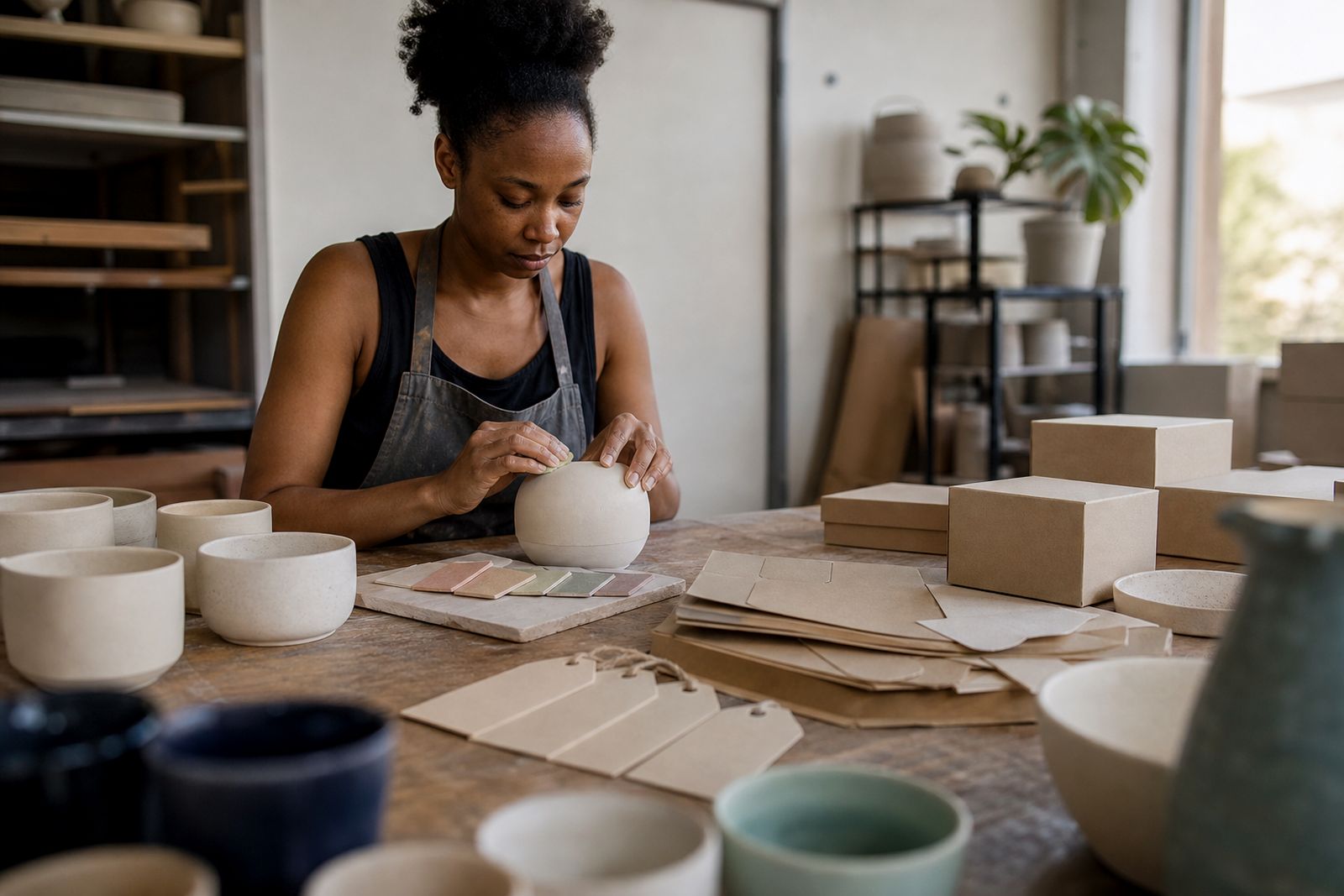
Clay body stamps and kiln notes
Routine tasks for managing clay body stamps and kiln notes:
- Foot ring mark check before biscuit firing
- Glaze crawl and handling risks in daily routines
- Foot stamp records, kiln logs, and return dockets
- Shelf-side check sheets for workshop use
Why pottery marks need discipline
Potters leave stamped or incised identifiers on the foot, base, or tag of each mug, bowl, planter, or plate. After trimming, biscuit firing, glazing, and a full kiln cycle, these marks must remain clear. Linking each mark to catalogues and records allows every piece to be traced reliably.
Similar chops from different makers at one market can cause confusion, and unreadable base marks on returned ware complicate tracing. Details such as the foot, stamp tool, and ware board before loading support clear identification.
Bench checks before kiln loading
Maker mark checks are essential before loading work into the kiln:
- Where the maker's mark sits on the foot
- Who records glaze codes against each batch
- Which written records identify the first pieces marked and include clear details
- Which drying or firing changes affected the outcome
- Which catalogue entry matches the maker mark
One person should keep the mark sheet current for the workspace, even where several hands throw, trim and glaze. If a stamp is recut, a handle changes, or a second kiln starts running different schedules, the notes should reflect it straight away. That avoids mixed stories when inventory returns from retail outlets, fairs or after courier breakage checks.
Daily routines and mark survival
The way work is organised affects how greenware dries and how marks remain visible after firing. Airflow, temperature changes, and movement through the workspace all play a part in how tags and marks hold up during making and market prep. Firing interruptions may also alter the look of a foot mark.
Record the clay body, firing range, glaze family, and tool used to impress or incise the base for each mark. A porcelain cup with a tiny maker chop behaves differently from a grogged stoneware platter with an iron oxide signature. With the mark record tied to one docket, similar ware that arrives with incomplete packaging or no tag can still be identified.
Common problems on returned ware
Shared stamp tools often move between makers, but without a dated note of who used each tool, tracking becomes difficult.
The contact form accepts city, claim name, and a short description in words of the mix-up or uncertainty, including details about the base mark, piece type, and any tag or box wording. Describing these features in writing helps match the issue to the correct catalogue and docket notes.
What our IP Protection customers say
Verified Google reviews
Also worth a look


Tell us about your mark
Send a note through our contact form with the mark name, the goods or services, where it will appear first and what worries you, and we will come back with practical next steps and a quote. General guidance only; formal filings go to a registered attorney.
Open the contact form