

Metal fab name plates
Name plates and weld stamps made to remain readable after years of site use.
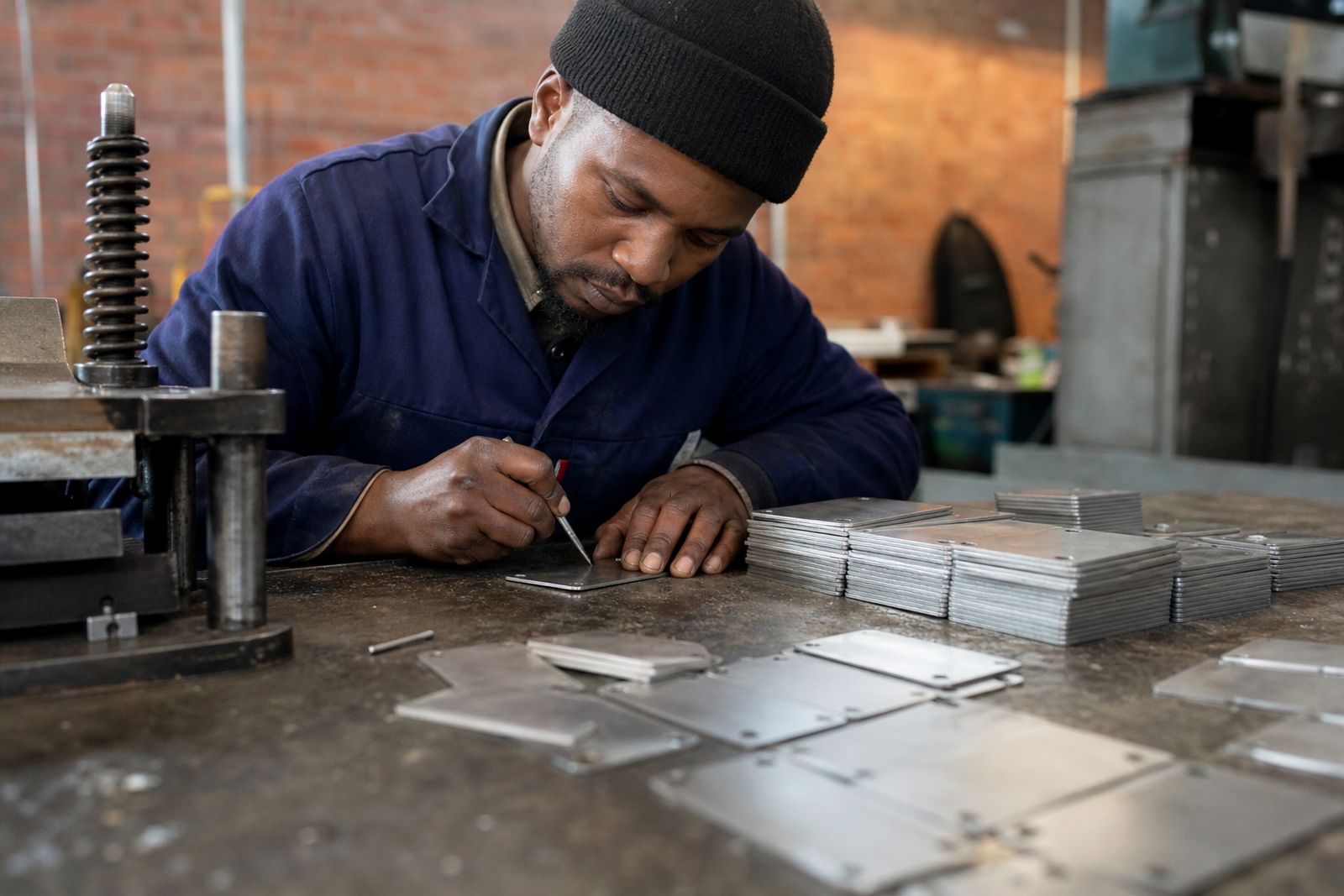
Plate materials for fabricated steel
Material choices affect plate durability and maintenance:
- 304 or 316 stainless for harsh environments
- Spatter, washdowns, and regular cleaning cycles
- Drawing refs, asset IDs, and serial layouts
- Fixing options for plant and field use
Readable plates after hard service
Metal fab plates carry the identity details that must survive rain, sun, and handling on site. Typical uses include equipment tags, machine name plates, panel IDs, bin numbers, and fabricated item serial plates. These plates must stay legible after transport, installation, and long periods outdoors.
Start by listing the exact information the plate must hold: maker name, model, serial, capacity, drawing number, or warning text. Then match the plate metal, thickness, corner finish, and fixing method to the job instead of treating every build the same. A plate for a galvanised gate motor cover does not face the same abuse as one on a pump skid at a remote site.
Set out the intended plate position, including the city, expected use, and marking method such as engraved, etched, stamped, or printed. State any drawing references or required wording for the plate. Marking and IP hygiene support is available for fabricated goods.
Plate details to settle first
Key factors to confirm before specifying a steel plate:
- What wording must remain readable outdoors
- How the plate is fixed to steel
- Which numbers tie back to drawings
- Whether cleaners or process temperatures will attack markings
- Which finish matches the product build
Someone in the workshop should own the final plate wording before cutting or marking starts. That check matters when a revision changes load figures, voltages, capacities, or client asset codes. If nobody signs off the text, old templates tend to ride along into the next batch.
Factors affecting plate selection
In Gauteng, strong sunlight can reduce the legibility of fine text on plates with a dull finish. On agricultural and mining sites, regular pressure washing, mud, vibration, and rough handling often have a greater impact on plate readability than appearance at the time of installation.
Plate size also affects legibility once the item is installed against mesh, pipework, or cladding. A marking that reads well on the bench may disappear after paint, glare, or a bad mounting angle. Check the finished position, not only the artwork proof.
Common plate problems on fabricated jobs
Using indoor-grade plates on outdoor frames. Riveting through text or logos because hole positions were guessed late. Copying serial formats from an old batch without checking the current drawing issue. Choosing adhesive only, then sending the product to a hot enclosure or wet plant room.
Details about the mounting area help suggest wording, plate type, and likely fixing method.
What our IP Protection customers say
Verified Google reviews
Also worth a look




Tell us about your mark
Send a note through our contact form with the mark name, the goods or services, where it will appear first and what worries you, and we will come back with practical next steps and a quote. General guidance only; formal filings go to a registered attorney.
Open the contact form