

Soft goods labels
Care and origin wording on labels for soft goods made in South African workshops reflects the practical requirements of local makers.
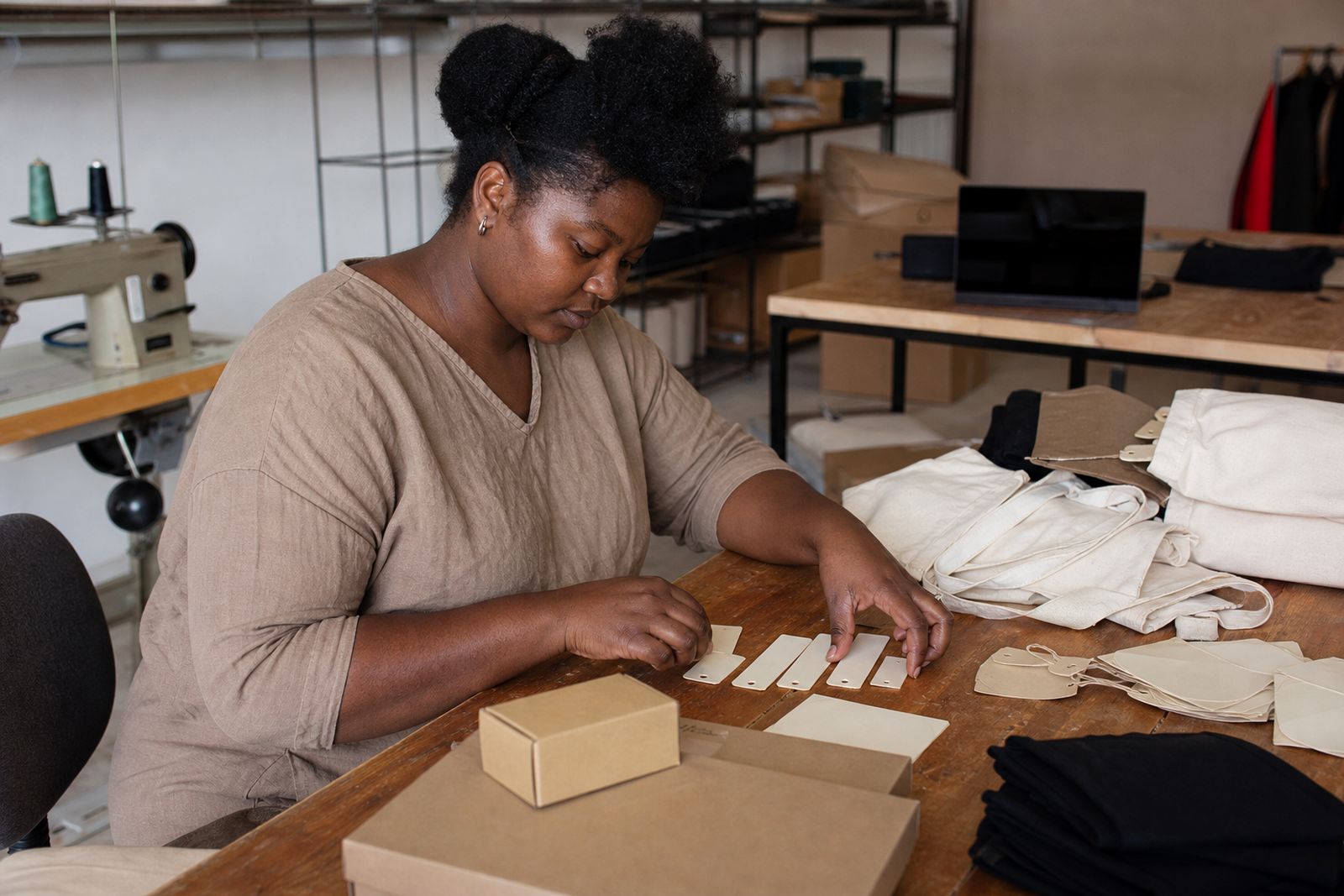
Woven tags and care lines
Quality checks for stitched tags and care lines include:
- Stitch line checks on collars, seams, hems
- Wash tests, fray checks, heat press handling
- Care wording sets, origin records, sample descriptions
- Batch sheets machinists can keep near tables
Why label wording goes wrong
Soft goods labels serve more than an identification role. They often list fibre content, care symbols, size, country of origin, and a maker mark that must remain readable after washing, ironing, and storage. A single incorrect line on a neck label or swing tag can lead to repeated errors across a production run. Label wording is treated as a key workshop material, not just decoration.
Problems often appear when woven labels, printed satin labels, and carton stickers all show different wording for the same garment. Compare what is sewn in, what sits on the hanger, and what appears on the outer pack after transport and storage.
Checks around sewn-in labels
Points to confirm for sewn-in garment labels:
- Placement at neck, side seam, waistband
- Responsibility for approving revised care wording on reruns must be clearly assigned.
- Sample note describing first applied label on garment
- Steam, lint, and ink transfer points
- Which batch record matches each label version
Final approval of each product line's label copy should be given by a named person before any labels are ordered or sewn. When several people handle design, cutting, sewing, and packing tasks, earlier label versions can end up in new runs, and incorrect fibre or origin statements may stay in use. Assign clear sign-off at the start of each production run to avoid these mix-ups.
Wear and storage in South African workshops
Workshop conditions can alter how labels perform. Printed labels may curl, carton tags might blur, and adhesive edges can pick up lint. Labels may look untidy after being moved between a customer's workshop, plant, or market stall. Print and barcode systems may also require checks to keep batch records clear.
Checking the care line as it appears on the garment helps avoid confusion. Comparing this with the packing label and the team’s sales description often reveals mismatches. Any difference between garment and label text should be corrected at the source before printing more labels.
Label failures seen in workshops
Common failures include sewing in imported labels without checking South African wording, trimming away origin lines because they scratch, and copying care text from a previous style with different fabric content. Another one is ordering thousands of woven tags with a brand line that was never checked against the rest of the mark set. Soft goods labels need a proof stage tied to the actual garment, not only the artwork file.
State the label wording and product in question, indicating whether it concerns woven labels, printed care labels, hangtags, size pips, or outer carton marks. Claims that match another sheet will be handled with the next step for that type.
What our IP Protection customers say
Verified Google reviews
Also worth a look




Tell us about your mark
Send a note through our contact form with the mark name, the goods or services, where it will appear first and what worries you, and we will come back with practical next steps and a quote. General guidance only; formal filings go to a registered attorney.
Open the contact form